What is Foetal Bovine Serum (FBS)?
The ethically and scientifically problematic ingredient underlying biomedical research.
Most people have never heard of Foetal Bovine Serum (FBS), yet it quietly underpins much of modern biomedical research - from cancer studies to vaccine production. Derived from the blood of unborn calves, this ingredient raises profound ethical questions and, increasingly, scientific ones too.
In this detailed blog, Dr Katie Bashant Day, Chief Scientist at Media City Scientific, explains:
- what FBS is
- how FBS is obtained
- what is FBS used for
- why have scientists used FBS for so long
- why the use of FBS is now being challenged from both a scientific and animal-welfare perspective.
- what is preventing scientists from switching from FBS to alternatives.
Expert insight: Understanding Foetal Bovine Serum (FBS)
When scientists grow cells in the lab, you’ll often see them working with dishes of bright red liquid - a nutrient mix used to keep cells alive and growing. What most people don’t realise is that this liquid usually contains Foetal Bovine Serum (FBS), an ingredient harvested from the blood of unborn calves.
FBS is widely used across biomedical research - from cancer studies to vaccine development and manufacturing - yet its origins are rarely discussed. Each year, an estimated 800,000 to 2 million bovine foetuses are used to produce it.
Beyond the ethical concerns, there’s also a strong scientific case for moving away from FBS. Its use affects research quality and reproducibility, meaning change is in everyone’s interest. Ultimately, what’s better for animals is also better for science.
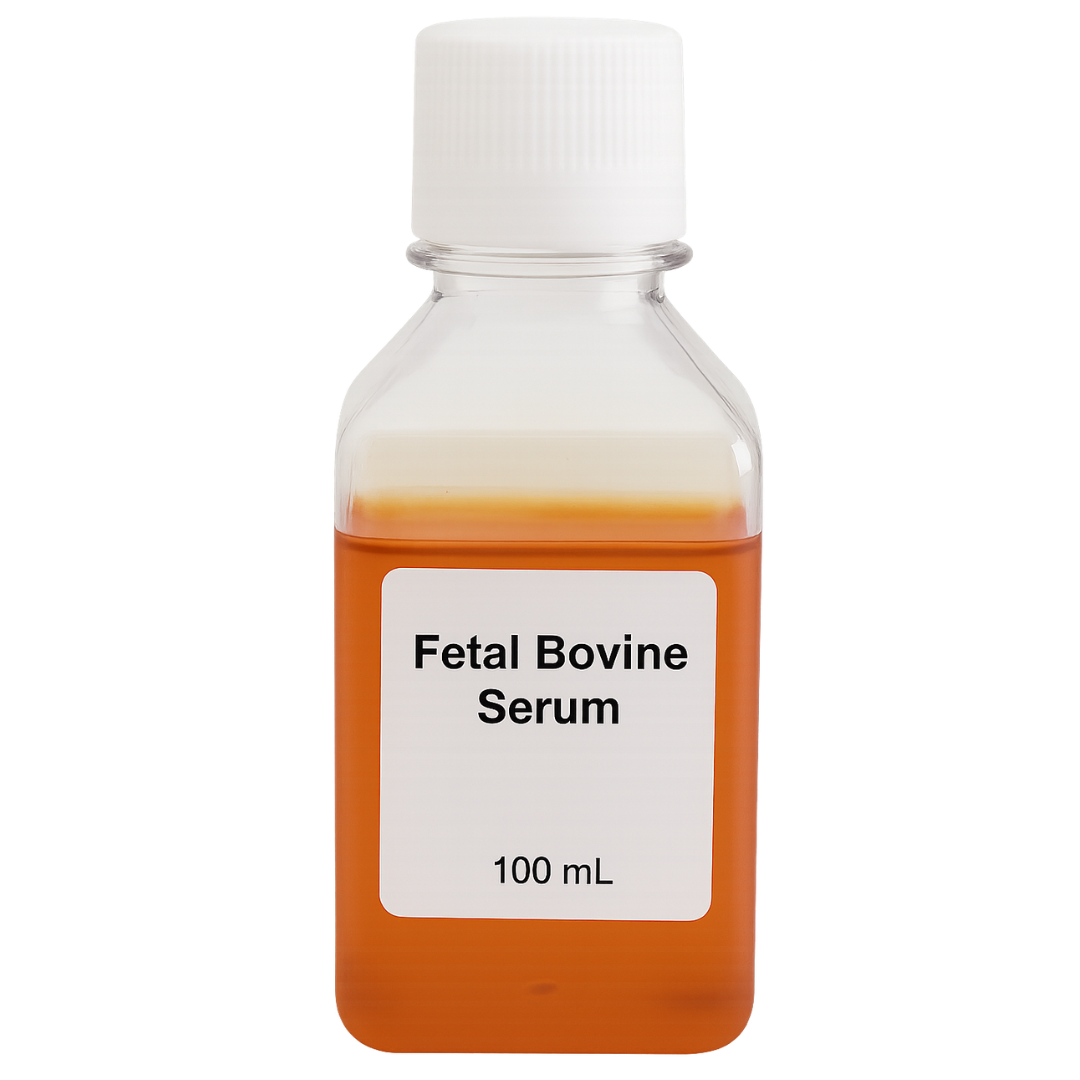
1. What is FBS?
Foetal Bovine Serum is a nutrient-rich liquid derived from the blood of bovine (cow) foetuses. When scientists grow cells, they need to provide those cells with nutrients, hormones, and growth factors they would normally receive from the bloodstream. The serum is added to basic cell culture media at 5–10% concentration.
2. How is FBS obtained?
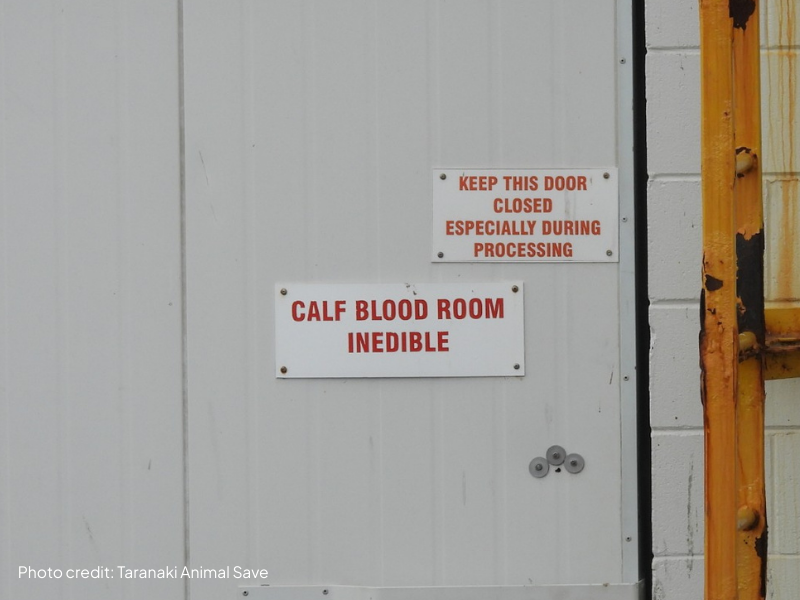
FBS production occurs at slaughterhouses when pregnant cows (approximately 1-2% of processed cattle) are killed for beef. After slaughter, foetuses are extracted and blood is collected via cardiac puncture: a needle inserted directly into the beating heart.
This raises significant ethical questions. The foetus must have a functioning heart for adequate collection. Whether foetuses at this developmental stage can experience pain or distress remains scientifically unclear. However, in the absence of definitive evidence, and given that no anaesthesia is administered, many consider this an unacceptable ethical risk.
Each litre of FBS requires 1–3 foetal hearts to be punctured.
3. What is FBS used for?
The global FBS market was valued at approximately USD $1.1–1.8 billion in 2023, with projections of over $2–8 billion by 2034. In other words, it’s a rapidly growing market.
Currently, approximately 90% of all cell culture studies use media formulations that typically include FBS. This includes basic research (e.g. scientists studying cancer biology or infectious diseases). FBS is also heavily used by pharmaceutical companies who use FBS-cultured cells for screening and testing new medicines, for vaccine and cell therapies production, and/or for freezing down cells for storage.
4. Why have scientists used FBS for so long?
- It works really well. There is nothing that supports an extraordinarily wide range of cells like FBS.
- Historical momentum. FBS became the standard when it was introduced in the 1950s. Protocols were published and an entire industry formed around it.
- Cost…partially. FBS prices fluctuate and it's common for scientists to stress about its price. That said, it has historically been less expensive than custom serum-free formulations.
5. And yet, why do scientists generally dislike FBS?
Perhaps surprisingly for something that's such a mainstay in the field, FBS use has substantial, increasingly recognised, scientific issues.
A. Batch to batch reproducibility causes problems.
Different cows are different and so every batch of FBS has a different make-up.
This means:
- Experiments may give different results with different serum batches.
- Researchers must "batch test" multiple lots before purchasing.
- Published studies may be impossible to reproduce later on.
B. Blood-borne products like FBS can be unknowingly infected.
Key contamination risks include viruses, mycoplasma, prions, and endotoxins. This is why Australia prohibits import of FBS from certain countries. An example that shows just how risky the FBS supply chain can be: ABC News reported on an international smuggling operation that ended with authorities killing a whole herd of cows because of contamination concerns.
C. Regulatory bodies are increasingly insisting on change
When scientists move their work from the lab into real medical treatments, they often need to switch to serum-free (animal-free) media. This is because major regulators — the U.S. Food and Drug Administration (FDA) and the European Medicines Agency (EMA) — increasingly expect clinical products to be made without animal-derived ingredients, due to concerns about contamination and inconsistent results.
D. FBS is increasingly expensive and supply is volatile.
Demand for FBS is rising, sending prices soaring and crippling the supply chain. It's projected to get a lot worse over the next decade. These supply pressures also raise concerns about quality control shortcuts and whether animal welfare standards can be maintained as demand intensifies.
6. What are the main alternatives to animal serum?
It’s scientifically challenging to replace serum while maintaining an ideal growth environment for cells. However, for those who want to make the jump there are options – particularly if the scientist has the time and funds to invest in the move.
A) Chemically defined media replaces serum with defined proteins, fats, etc
- Pros: Consistent composition; reduced contamination; better regulatory approval.
- Cons: Expensive; typically very cell-type specific and require optimisation.
B) Human Platelet Lysate (hPL) derived from human blood donations:
- Pros: Human-derived may suit human cells better; available from blood banks.
- Cons: Donor variability; extensive viral screening needed; limited supply and thus expensive.
C) Plant-Based Alternatives, called "hydrolysates":
- Pros: Potentially sustainable & contaminant-free.
- Cons: Reproducibility challenges remain; experimental and require ample optimisation.
A new alternative
Since the publication of this blog, Katie and her team have launched a new FBS alternative called Foetal Bovine Serum Replacement Solution - FRS Pioneer. This was designed to overcome the limitations of existing alternatives. Read more here.
7. What’s preventing scientists from switching to alternatives?
While the scientific challenge shouldn't be understated, it is also very challenging to break a 50+ year habit. Here is what the scientists who want to switch are up against:
- Costs: Serum-free alternatives tend to be more expensive, plus you need to factor in the financial and time-related costs of switching.
- Optimisation needs: Effective serum-free media currently on the market are generally cell-type specific. This isn't helpful if, like most labs, you grow a wide variety of cell types.
- Lack of awareness/know-how: Many scientists simply don't know that alternatives exist or how to approach them.
- Publishing concerns: Most published papers used FBS-supplemented media. Many scientists are concerned that switching to a new media would require extensive validation to make it through the publication process. Although this should arguably also be true for every new batch of FBS used, scientists tend not to think about FBS batch variation beyond it being a necessary evil.
To be clear, many scientists would prefer not to use animal-derived products, due to both ethical and scientific concerns. The barriers are systemic, requiring better alternatives, support from institutions, funding bodies, and journal editorial boards, as well as broader recognition that switching is possible.
As a scientist who has spent many years studying alternatives to serum in cell culture, it’s my belief that mass adoption of serum-alternatives will only be achieved with 1) an extremely simple transition process and 2) cost-parity with FBS.
8. Is FBS used in alternatives like organoids and "human-on-a-chip" systems?
Yes. FBS is often critical for these experiments which may involve complex co-culture models. These can be challenging to adapt out of serum-containing media completely, though serum can often be reduced.
Interestingly, recent research achieving FBS-free organoid culture across multiple organ types has indicated elimination of FBS is helpful in achieving faithful replication of human physiology. As such, there is increasing interest in moving towards serum-alternatives.
9. How can researchers start transitioning away from FBS?
We will provide practical, lab-tested advice in a future blog. In short, don’t be afraid to start small. Serum-elimination is achievable for some applications and serum-reduction is the more realistic choice for others. At an institutional level, consider advocating for training workshops on serum-free methods and sharing successful transitions with colleagues.
10. Why the scientific issues matter for animals
You might be thinking: “Who cares about batch variability - what about the animals?”
Here’s why the scientific issues matter just as much as the ethical ones:
- Scientists must justify how they spend their funding: If FBS causes inconsistent or unreliable results, they are far more motivated to switch for practical reasons.
- Reproducibility problems affect careers and companies: Failed experiments, unusable data, or delays directly impact a researcher’s ability to deliver on grants or develop successful products.
- Regulators respond to scientific risks: When agencies such as the FDA and EMA identify contamination risks with FBS, it becomes a powerful driver for change.
- Every scientific problem with FBS makes alternatives more attractive, which reduces demand and animal use.
In short: while ethical and sustainability concerns are gaining traction, the strongest lever for change at the level of individual labs and purchasers is still the scientific case. That’s where supporters can help amplify the shift.
How you can help
New Zealand has a unique opportunity to lead the transition away from FBS.
BAR is currently working with NZ research and teaching institutions to support the first practical trials of FRS Pioneer right here in NZ!
The long-term goal is to help make the routine use and production of FBS in New Zealand unnecessary and obsolete.
This groundbreaking work - supporting real NZ labs to trial alternatives in real research environments - depends on public support.
Donations help fund:
- the animal-free alternative products themselves
- the logistics of importing and distributing them
- practical support for researchers during trials
By giving, you’re helping to:
- reduce (with the aim of ultimately replacing) the killing of unborn animals
- improve scientific reliability
- move New Zealand research toward a more ethical future beyond harmful animal use
This is an exciting opportunity where ethical progress and better science align - and where real change for animals and science is genuinely within reach.
________________________________________________________________________
The bottom line
Scientists genuinely do face barriers when trying to move away from FBS but with support from journals, funders, universities, and the public - plus the growing availability of affordable alternatives - animal-free cell culture can become the new standard.
This shift is ethical, but also pragmatically necessary.
Biology is struggling with a major reproducibility problem, and animal-derived products like FBS make it worse. Regulators are increasingly requiring animal-free processes for clinical work. Supply chains are unstable and costly, and the ethical issues remain unresolved.
By moving away from FBS, we make our research systems cleaner, more consistent, and ultimately more human-relevant - while reducing the number of animals harmed and used. When ethics and good science point to the same solution, we have every reason to act, and to act quickly.
________________________________________________________________________
About the Author – Dr Katie Bashant Day
Dr Katie Bashant Day is a biomedical scientist by training and co-founder of Media City Scientific, a company developing advanced technologies to replace animal-derived materials in research. Katie holds a PhD in Medicine and has extensive experience leading innovation in cell culture systems, tissue engineering, and serum-free technologies. Passionate about advancing ethical, high-quality science, Katie is an advocate for replacing animal-sourced ingredients like FBS with defined, consistently reliable alternatives.



.png)
.png)
.webp)

.webp)


.png)
.png)
.png)
