The future of cell culture: a genuine alternative to Foetal Bovine Serum (FBS)
Foetal Bovine Serum (FBS) has long been used in cell culture but comes with major scientific, ethical, and practical problems. Cell culture expert, Dr Katie Bashant Day introduces a new animal-free alternative she has developed to genuinely help replace FBS in research.
This blog is part two of a series by Dr Katie Bashant Day, Chief Scientist at Media City Scientific. Part one explored how Foetal Bovine Serum (FBS) is obtained and why its use is facing growing scientific and ethical scrutiny. In this second part, Dr Day introduces a new alternative she has developed to genuinely help replace FBS in cell culture. This blog is technical in part to help inform the scientific community as well as our supporters with a keen interest in FBS.
1. What is FBS and why does it matter?
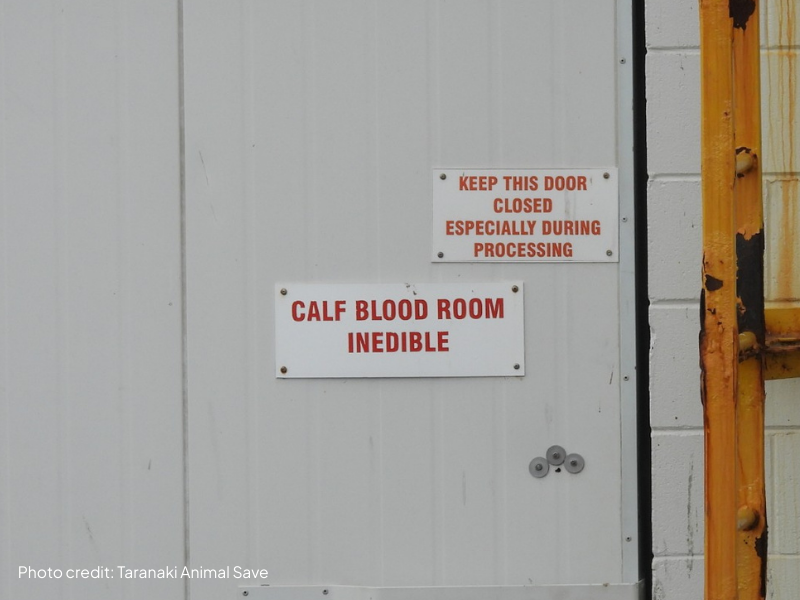
Foetal bovine serum (FBS) is a substance derived from the blood of unborn calves and used to help cells grow in the lab. It’s a common ingredient in research and vaccine development. To produce FBS, blood is collected from foetuses during the slaughter of pregnant cows.
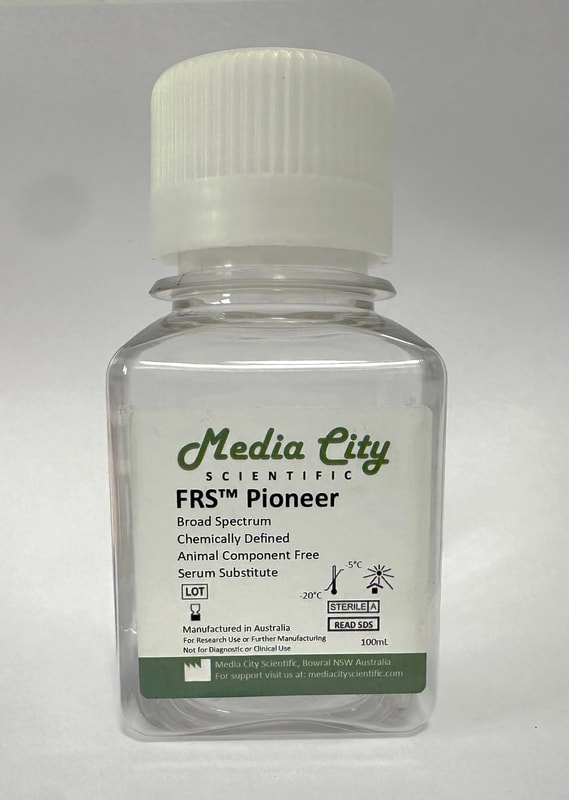
For decades, FBS has been both indispensable to scientific research and a deeply problematic reagent for scientific reproducibility. Now, after years of development and validation, a genuine replacement is finally within reach. Foetal Bovine Serum Replacement Solution (FRS) Pioneer has been painstakingly built to match FBS performance for a wide variety of its most common use cases while eliminating its scientific, ethical, and supply-chain limitations.
2. Why I set out to build an alternative
I’ve been culturing cells using FBS for nearly twenty years. My earliest journal club presentation centred this study in which mouse cells cultured in vitro with human serum gave a human-centric immune response. Meanwhile, human cells cultured in vitro with mouse serum gave a mouse-centric immune response. While this covered just one disease model, it sparked an awareness/interest in the use of fetal calf serum in cell culture from the beginning of my career.
During my PhD, I saw firsthand how batch-to-batch variation in FBS disrupted research reproducibility. After joining the cultured meat startup Vow, my first role was to eliminate FBS from our cultures. Later, I led a science and engineering team developing an optimisation platform for animal-free cell culture media. Although that work focused on specialised media, I kept hearing from scientists how valuable a broadly accessible, easy, and affordable serum-free option would be.
No one had created a drop-in, cost-accessible FBS replacement suitable for a wide audience- so I decided it was time to try.
3. The problems with FBS
Many scientists are concerned about FBS, but realistic, accessible alternatives have been limited. Batch-to-batch variation forces researchers to regularly test new FBS lots or stockpile large quantities to maintain consistency. Scientific literature clearly shows that FBS variation significantly affects results, contributing to today’s reproducibility crisis.
For therapies intended for human use, animal-free systems are increasingly expected, and starting research in an animal-free system makes clinical translation much smoother.
Ethical and sustainability concerns continue to rise, and with demand increasing, FBS costs have skyrocketed.
I go into more of this detail in the first blog of this two-part series, which is aimed at a more generalist audience.
4. Why existing FBS alternatives haven’t worked
FBS alternatives – good ones - absolutely exist already. For some use cases, they’re a great choice; for example, high density, serum-free media has been optimised for CHO and HEK cells to achieve maximal productivity in biomanufacturing platforms regularly used by industry.
The challenge has been making these alternatives broadly accessible. High-density media are appropriate for companies which require a single media, optimised for a highly specific purpose. They’re prohibitively expensive and a poor option for the R&D group which grows ten different cell lines, all with varied nutritional needs.
Our goal has been to make animal-free cell culture technically easy and financially attainable. We developed a drop-in supplement that supports reproducible research for a broad range of everyday applications - the gap I felt repeatedly throughout my years in research.
FBS demand will continue to rise over the next 10 years, which will drive prices up. However, we can mitigate this trend, while also improving reproducibility of our workflows, by transitioning workhorse applications (i.e., use in cell culture courses, expansion of cell lines, freeze media, etc) to a functional animal-free alternative.
5. Introducing the new alternative: FRS Pioneer
After several years of R&D internally, we developed Foetal Bovine Serum Replacement Solution - FRS Pioneer. This is a fully animal-free, chemically defined formulation that is designed to swap in for FBS for a range of common applications. It contains no BSA or other proteins that are animal-derived; this is not particularly common for a serum replacement product. The result is that it is 100% reproducible from batch-to-batch.
Adapting cells from serum-containing media to serum-free media has historically required substantial time and effort. FRS Pioneer was designed to mimic the makeup of FBS as much as possible; so, for most cell lines, a simple swap over of media works quite well.
6. The science behind it
We’ve published ample scientific data on our website and as scientists ourselves, we are always happy to respond to questions about the product’s formulation or how it works.
This data was collected internally, but we also spent an entire year pilot testing FRS Pioneer with external scientists to ensure it could slot into a wide variety of standard workflows (think different basal media, different passaging processes, etc.) We worked with 15 different Australian laboratories to make sure FRS Pioneer is genuinely user-friendly.
Overall, data show FRS Pioneer is a good 1:1 substitute for FBS for use in freeze media or growth of standard cell lines. It can be mixed with 1-2% FBS for more demanding primary cells; so even for cells where it’s not yet a perfect substitute, FRS Pioneer can dramatically reduce the amount of FBS used in culture.
Scientists have been particularly interested in using FRS Pioneer for cleaner assays.
7. Why this solution is revolutionary
There are many use cases where FBS no longer needs to be the default. This includes freeze media, cell culture courses, expansion of many of the bread-and-butter cell lines used for research or drug discovery, and standard assays.
I am obviously biased, but the result is a stepwise improvement in reproducibility and consistency. Labs can avoid batch-testing and stockpiling FBS in the hopes of maintaining one batch throughout a given study. Global collaborations based on consistent cell culture will become simpler and, in the future, labs will be able to replicate scientific studies published years ago.
Even for nutritionally demanding primary cells which still require some FBS for culture, dropping the FBS concentration from 10-20% to 1-2% dramatically extends the length of time a given batch of FBS will last. Even this improves consistency.
By moving just some of the workhorse applications for FBS to a broad spectrum chemically defined alternative, demands for FBS won’t grow as dramatically as projections forecast. This impacts the price of FBS. FRS Pioneer is currently priced on par with premium FBS, but its costs will drop as recombinant protein technology improves, unlike FBS which will do the opposite as demand increases and supply remains constrained.
Of course there are ethical and sustainability angles to consider as well. I’ve seldom met a scientist who loves the idea of where FBS comes from.
8. How NZ researchers can access it
FRS Pioneer is on market now, with our first commercial batch to be shipped out to customers before Feb 15th, 2026. We offer a 100mL bottle on our website and you can reach out to me directly on our website with questions. We continue to engage in collaborative projects where mutually beneficial, so please feel free to contact me if this is of interest.
For the first six months, we will be focusing on the Australian and NZ markets to ensure we can provide one-to-one support for every scientist who wants to trial going serum-free. From there, we will likely partner with distributors to make FRS Pioneer globally accessible.
9. Your support can bring this breakthrough into NZ research
A reliable, ethical alternative to FBS can only create real change if people can access it - and that’s where BAR needs support. We’re working to establish a New Zealand pilot programme that will generate the case study needed to accelerate adoption across research institutes nationwide.
If you believe NZ science deserves tools that are ethical, reproducible, and future-focused, please consider supporting this work. Your donation helps bring this breakthrough into Kiwi laboratories.
About the Author – Dr Katie Bashant Day
Dr Katie Bashant Day is a biomedical scientist by training and co-founder of Media City Scientific, a company developing advanced technologies to replace animal-derived materials in research. Katie holds a PhD in Medicine and has extensive experience leading innovation in cell culture systems, tissue engineering, and serum-free technologies. Passionate about advancing ethical, high-quality science, Katie is an advocate for replacing animal-sourced ingredients like FBS with defined, consistently reliable alternatives.


.png)
.png)
.webp)

.webp)


.png)
.png)
.png)
